FAQ’s
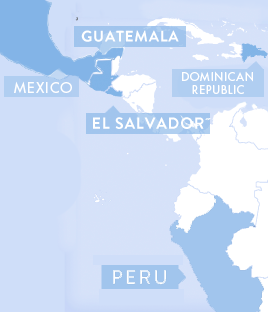
In 1994, Dr. Robert Michler, founded Heart Care International by bringing together a small volunteer team of medical professionals from New York City to travel to Guatemala and administer life-saving pediatric surgery for 25 Guatemalan children. This experience solidified Heart Care International’s commitment to Guatemala and the need to provide continuing education and training the local nurses and doctors. The outcome resulted in a long-term partnership between Heart Care International and the local medical community in Guatemala. The new goal was to provide not only medical and surgical procedures for local children, but to build a self-sufficient, independent pediatric cardiac program through training and education.
After working for several years as Surgeon in Chief for Children’s Hospital in Boston, Dr. Aldo Castañeda, came to work in Guatemala. Building on Heart Care International's experience and using his local influence and international reputation, Dr. Castañeda established a permanent pediatric heart center in Guatemala City.
In 2000, following the extraordinary transition to a more permanent program in Guatemala, Heart Care International transitioned its efforts to the Dominican Republic. HCI partnered with Heart Care Dominicana - a local non-profit created to benefit Dominican cardiac patients. In 2007, with the support of Heart Care International and the consortium created by the International Hospital for Children, Heart Care Dominicana successfully opened the doors of the first independent pediatric cardiac care program in the Dominican Republic, CEDIMAT. Currently Heart Care International maintains a close connection with CEDIMAT and the David Ortiz Children’s Fund, a non-profit organization whose mission is to provide essential support for children in the Dominican Republic who cannot afford the critical cardiac care they need.
In 2005, Heart Care International entered its third commitment in El Salvador. Using the experiences in Guatemala and the Dominican Republic, Heart Care International partnered with Sana mi Corazón, an El Salvadorian non-profit organization; with the Benjamin Bloom National Children’s Hospital in San Salvador, the only public children’s hospital in the country; and with the Diagnóstico Hospital, a private hospital with catheterization lab facilities.
In 2011, Heart Care International entered a new commitment in Peru by partnering with the Instituto Nacional de Salud del Niño (INSN). Raising the level and quality of the hospital’s diagnostic and surgical care for pediatric heart disease was the established goal. This goal continues to be developed through annual missions and continuing education and training between trips.
Mexico became the next location for Heart Care International to establish a partnership. Welcomed by directors of the Hospital Especialidades Pediátricas (HEP) de Tuxtla-Gutiérrez and Hospital Meterno Infantil de Comitan, HCI launched the 5-year minimum partnership in 2015, championed year-round by the local non-profit organization, Todo por el Corazon de un Niño.
Before the pandemic, Heart Care International began initial talks with a new host country. HCI remains committed to developing and maintaining current and new relationships with host hospitals in developing countries who are willing to commit what is needed to build self-sufficient pediatric cardiac care programs.
During and since the pandemic, Heart Care International has actively increased its educational offerings and patient care through tele-conferencing.
Heart Care International is a privately funded, non-sectarian, 501(c)(3) non-profit organization. The backbone of our financial support comes from a variety of sources:
- HCI’s leadership – our Board of Directors and Medical Advisory Board
- Foundations
- Team members
- Friends, old and new
- Grateful patients
In addition, in-kind support and donations from major health care companies are a critical piece of Heart Care International’s mission trip success.
Lastly, we strive to establish a partnership with a local foundation or non-profit organization in each location where we travel. These organizations provide essential support while we are in-country. They also serve as excellent liaisons with the local medical community and government officials before, during and after HCI’s missions.
Heart Care International is proud to be an extremely lean organization. We are staffed by only 2 full-time employees – Executive Director Margaret Feldmeth and Logistics Director Betsy M Tirado RN. A contract bookkeeper rounds out HCI’s employees. Office and administration costs remain at a minimal level, allowing us through the years to consistently keep our overhead expenses between 5% and 8%. Almost every penny of your donation goes directly to helping the children.
Heart Care International partners with hospitals in developing countries that want to raise the quality of their cardiac service for needy infants and children. Through this partnership, HCI commits to a minimum of a 5-year relationship to help build the local pediatric cardiac program through the following means:
- hands-on training in the operating room, ICU, and cardiology evaluation during mission trips
- conferences, lectures, and presentations given in-person during mission trips
- bedside training during mission trips
- on-going HCI patient care through tele-conferencing between mission trips
This direct patient care fulfills a large piece of Heart Care International’s mission. Equally important is the Education piece of our mission. We do not want to help needy children only while we are in-country. We want to have a lasting impact 365 days a year.
This all makes Heart Care International different from other seemingly similar medical mission teams. Our hands-on training occurs during our mission trips. Our educational offerings are year-round, specialized, and can be specifically requested.
Children in the foreign country are identified initially by local medical professionals, usually the cardiologists at HCI’s partner hospitals. Each mission trip begins with the local cardiology team and the Heart Care International team evaluating the children through an intake exam. Once evaluated, the local and HCI team of cardiologists, surgeons and ICU members discuss and select the children best suited for a surgery or a catheterization procedure during the on-going mission. Often children not receiving HCI care during one mission will be scheduled in advance for the next mission.
Children who receive evaluations, medical procedures and surgeries from the Heart Care International team continue their care by their local, trained medical professionals after the HCI mission.
Between mission trips, Heart Care International’s medical professionals remain in contact with the local medical team to assist as issues arise.
Often, former HCI patients will come for an evaluation when the Heart Care International team returns. It is always heart-warming to see our patients living healthy lives!
Heart Care International is going to keep doing what we’ve been successfully doing since 1994. In addition to mission trips and year-round education, we have recently expanded the ways we can support needy children in our host countries.
Our volunteer medical team has risen to the challenges posed by the Covid pandemic in their home institutions as well as for Heart Care International. Travel has been limited; creative ways to continue helping needy children had to be identified.
Through the generous sharing of their time and expertise, Heart Care International has been able to organize a virtual healthcare system that can quickly respond to patient questions and needs from our host country medical partners. All from the comfort of team members’ homes.
We are continuing to build our virtual healthcare system and offer tele-conferencing options to local medical teams. This is especially important for new patients when the case is challenging.
We are also working on IT solutions to better enable remote image transfer for tele-conferencing consultations. Stay tuned.
Heart Care International’s future is bright!
Heart Care International is proud to staffs its missions with credentialed medical volunteers from the following medical specialties:
- pediatric cardiac surgery
- pediatric cardiology
- pediatric echocardiography
- pediatric cardiac anesthesia
- pediatric operating room nurses and technicians
- pediatric intensive care doctors and nurses
- perfusion therapy
- pediatric respiratory therapy
We welcome pediatric medical and surgical volunteers from any country. To date, our highly revered volunteer team represents over 70 top-caliber medical institutions throughout the United States and 7 countries.
We currently are not able to offer non-medical volunteers the opportunity to join our travelling team.
If you have questions or comments that you’d like to discuss, please contact Heart Care International’s Executive Director, Margaret Feldmeth. You can call the office or email Margaret directly: +1 (203) 552-5343 or margaret@heartcareintl.org.